"Vigorously told deceptions and battle scenes." ~Publishers Weekly review of Eolyn

"The characters are at their best when the events engulfing them are at their worst." ~Publishers Weekly review of High Maga
Showing posts with label science. Show all posts

Monday, June 2, 2014

NAPIRE 2014

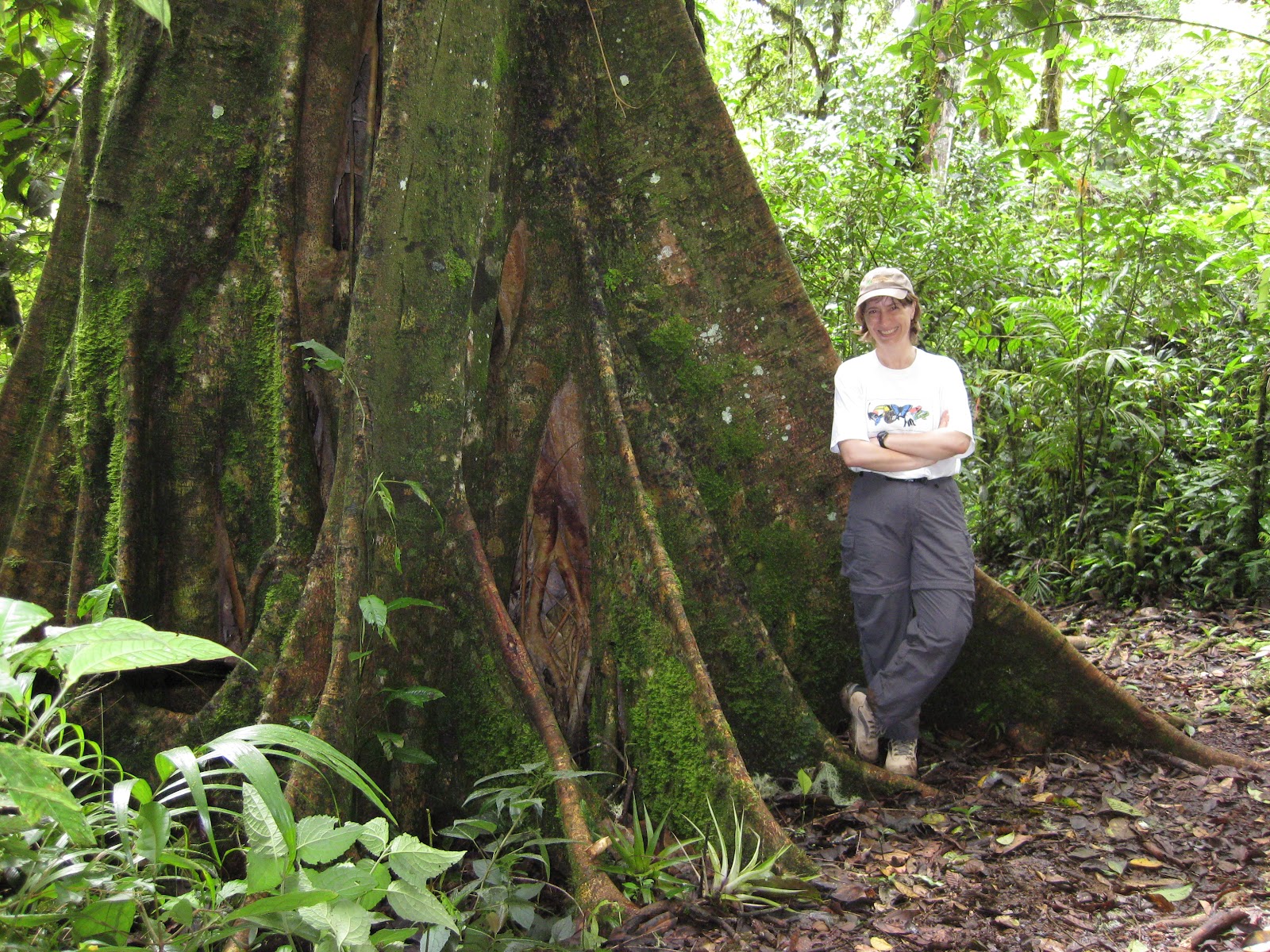
Me and one of my old friends at Las Cruces.
The semester at Avila has ended, and all of the sudden I find myself in Costa Rica preparing for my next NAPIRE summer.

Those of you who follow my blog may remember that every other year I return to Las Cruces Biological Station in southern Costa Rica to participate in the Native American and Pacific Islander Research Experience (NAPIRE) Program

Funded by NSF and LSAMP, this 8-week adventure brings together Native American and Pacific Islander undergraduate students, who conduct independent research under the guidance of experienced field ecologists. Students identify questions and hypotheses, design and implement their own experiment, and analyze, interpret, and present the results. All of this in the context of the magnificent mid-elevation tropical forest that characterizes the mountains of southern Costa Rica. 

I helped set up NAPIRE back in 2006, when I was still working full time for Duke University and the Organization for Tropical Studies. After accepting my current position at Avila University, I’ve returned every other year to participate in NAPIRE as a research mentor. This year I’ve taken on a new and somewhat daunting challenge: I will be co-coordinating the program with Barbara Dugelby. Our team includes two teaching assistants, Lelemia Irvine, a kukupu o ka aina of Hawaii, and Nicole Kenote, a member of the Menominee Indian Tribe of Wisconsin. 
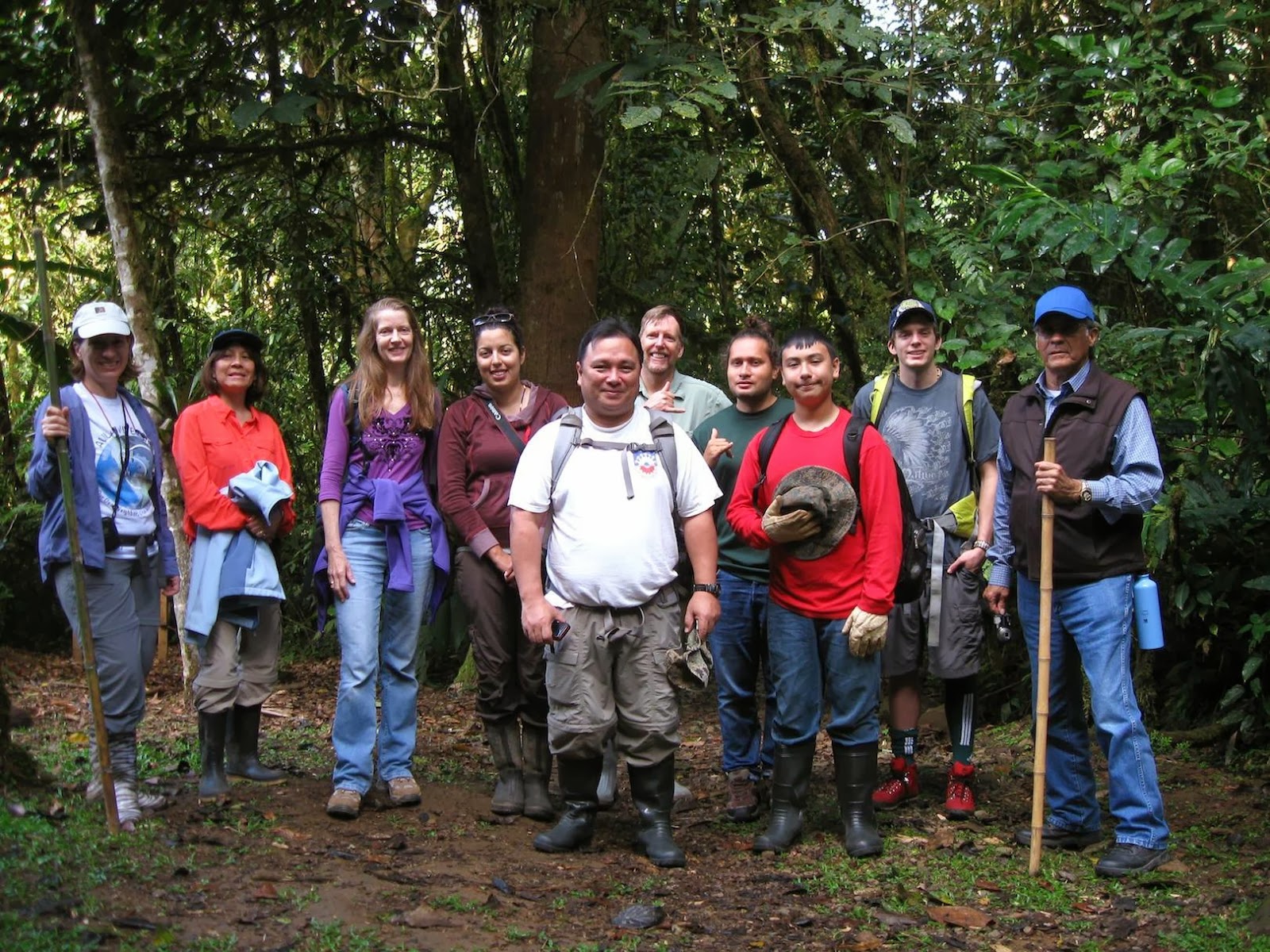
NAPIRE Best Practices workshop in January 2014.
Diverse cultures, diverse minds, diverse forests.
Photo courtesy of Lelemia Irvine.

When the 2014 NAPIRE community is complete, it will consist of 20 students from various Native American Tribes and Pacific Islander Peoples, as well as 10 mentors from around the world. In addition, we will be welcoming mentors from our students’ home institutions as well as a tribal elder, Dr. Don Pepion, and a cultural practitioner, Ku'umeaaloha Gomes.


I have long had an instinctive love for NAPIRE. From the first time I heard about the program, I understood that this is one of those rare initiatives that could truly transform the world. Not from one day to the next, of course, but by planting seeds of change capable of germinating and flourishing long after the 8-week experience has concluded. This because NAPIRE not only teaches students science, it seeks to bridge the gap between scientific and indigenous knowledge systems — a gap that all too often seems insurmountable, abyssal in its depths, ready to swallow anyone who attempts to cross it.


As part of my personal preparation for this summer’s program, I have begun reading Grandmothers Counsel the World, a book by Carol Schaefer that consolidates the experience and wisdom of 13 women elders from different indigenous tribes.


In the foreword, Winona LaDuke makes a compelling argument that the current paradigm, driven in part by a Western approach to science, cannot show us the way out of the planetary crisis, because it is precisely this paradigm that created the problem the first place.


This is a difficult argument for an ecologist to read, even more difficult when the words sting with the weight of truth.


And so the question sticks in my mind:


Can science solve the problems science has created?


I have a feeling I will be mulling over this one for some time, perhaps the entire summer and beyond.


On the one hand, scientific advancement has allowed us to exploit the planet in a way never before seen in history.


At the same time, science has illuminated the extent of the damage we have done, and continue to do. Data gathered by scientists has often urged us into decisive action, as for example with the Clean Air Act of 1970 and the Montreal Protocol (1987).


Science is extraordinarily powerful when it comes to deciphering the inner workings of the natural world, yet science offers little in terms of guidance regarding what to do with that information.


Where, then, can we turn for such sorely needed guidance?


Schaefer and LaDuke point to the Grandmothers and their collective wisdom, a rich reservoir of knowledge that spans hundreds, even thousands, of years. Indigenous knowledge systems, they argue, are not simply a place to start. They should occupy a central role in our collective effort to ensure a better, more sustainable future for all of humanity.


All of this brings me back to NAPIRE, a relatively modest effort to create a playing field on which scientific and indigenous knowledge systems interact on equal terms. Every summer I’ve joined NAPIRE has been a new adventure, each iteration distinct in many important ways from the last. Yet no matter the particular experiences of a given summer, I always come away with a deeper appreciation of NAPIRE students and the many cultures they represent. I know the much of the future rests in their hands, and that thought gives me a lot of hope.


This is one of many reasons why I am so excited that the door to NAPIRE 2014 is about to open, allowing me to participate in the many challenges and unique gifts this opportunity has to offer. I invite you to join me as a virtual companion when I step through that door, as the NAPIRE experience will be the focus of many posts from now through early August.

This is one adventure you do not want to miss. 

If you would like to know more about the International Council of Thirteen Indigenous Grandmothers, please visit their webpage


Friday, September 21, 2012

A Chaste and Lawful Marriage

It is no easy task to get nature to conform to the Laws of Nature. ~Evelyn Fox Keller

Aargh!  My master plan for this week's post has been foiled. 

I had hoped to embed a wonderful video for you on my blog, an interview entitled Science and Gender: Evelyn Fox Keller, produced by the Films Media Group in 1988.  One would think there'd be a public version of this video -- an excerpt at least (5 minutes, please?) -- somewhere in the vast universe of the internet, but if such a jewel exists, I have not found it.

A physicist by training, Keller has published multiple volumes on the relationship between language, science, and gender, including the biography A Feeling for the Organism, which documents the life and work of the geneticist Barbara McClintock, recipient of the Nobel Prize for her discovery of transposons.

In this very engaging interview with Bill Moyers, Keller explores how language influenced the foundational philosophies of modern science, and how those philosophies -- established centuries ago -- continue to shape science even today.

"Henry Oldenburg," Keller points out, "said it very clearly.  The purpose of the Royal society was to establish a truly masculine philosophy.  Why?  What did they mean by a truly masculine philosophy?  Francis Bacon said 'Let us establish a chaste and lawful marriage between mind and nature...'"

With these and other references, Keller identifies marriage as a central metaphor for the scientific revolution.  And not just any marriage, but a particular model of marriage, a patriarchal model in which the purpose was the domination of nature (woman) by the mind (man).

As part of this metaphor, qualities such as objectivity and reason were associated with the masculine, and fully incorporated into the scientific endeavor.  Qualities of empathy and emotion were linked to the feminine and rejected.      

Why? Keller asks. 

Where do these ideas come from?  What does it mean to create a dicotomy between objectivity and empathy? Why would we call one masculine and the other feminine?  Why was one recognized and the other rejected in the definition of science? 

Of course, these are metaphors established over four hundred years ago, but remarkably Keller identifies many contemporary examples where the ideas articulated by Oldenburg and Bacon still drive the scientific endeavor.

The labeling of empathy as "feminine" (when in fact, as I think most of you would agree, women do not have a monopoly on empathy), and the exclusion of both from "science" has had important consequences.  It not only shapes our vision as to what science is, it perpetuates a fantasy that science can be practiced in a way that is free of human values, preconceptions and aspirations.  It perpetuates the myth that science is objective.

Any human product cannot be free of human values, Keller insists.

Yet nature, as her interviewer Bill Moyers points out, is not a human product.

True.  But science does not give us nature.  It gives us a construct of nature.  A powerful construct, to be sure, but a construct nonetheless.  One that will always be colored by the lens of human language and perception.

It was at about this point during the interview that I started getting itchy.   Objectivity is a fundamental value of science. All scientists strive for it; I myself have striven for it. So it is very difficult for me to contemplate the full implications of Keller's argument.

What would happen if we were to remove this pillar upon which the scientific establishment has been built? Just thinking about it gives me the feeling of standing on a precipice; knowing that if I jump everything that I thought I knew about science might be fundamentally altered. 

Will I fall forever, flailing blindly into an uncharted abyss?  Or is there a new structure out there waiting to be discovered?  A revolutionary approach that will make science even more powerful, more productive than it has been for the past four centuries? 

Keller's answer is a hopeful one.  She is convinced that if we can better understand the relationship between language, values and science, we will be able to harness this creative resource in ways that would be even more productive, and geared to a greater wellbeing of all humankind. 

Is she right? 

I don't know.  But Evelyn Fox Keller certainly gives one a lot to think about, and for that I am most grateful to have had the opportunity to get to know some of her scholarship.

Wednesday, August 29, 2012

Biology and Destiny

Myth or history? Pope Joan, an 11th
 century girl who wanted to be a priest,
and made it all the way to the top.
Once upon a time, when I was attending Queen of the Holy Rosary Grade School in Overland Park, Kansas, I wanted to be a priest. 

I was religiously minded as a child, devout in my faith, and most importantly, absolutely convinced I could do a better job with sermons than any of the priests I knew.  

There was, of course, one important problem with my career plan:  I was a girl.  

This was not my first confrontation with the ways in which gender would influence the path of my life, but it was one of the earliest. 


When I decided to direct my professional ambitions toward science instead, I had a very different experience.  I was lucky to be growing up in the 70s and 80s, a time when doors were opening for women in the sciences like never before.  My grade school and middle school science teachers introduced me to the wonders of the solar system, and indulged my dreams of becoming an astronaut.  In high school, my biology teacher facilitated a life-changing experience, allowing me to conduct my own original research for an innovative cancer treatment at the University of Kansas Medical Center. 

Sally Ride, the first woman astronaut
to  reach low earth orbit, was one
of my role models during high school.
By the time I reached college, I had settled comfortably into the assumption that gender was not an issue when it came to pursuing a career in science. So it was something of a surprise when the rules and regulations of gender began to crop up during my undergraduate and graduate years. 

The first indications of gender issues emerged from the stories of my mentors, faculty members who formed part of the first big wave of American women that broke into the academy.  But there were also many incidents I witnessed or experienced, and questions that came with them.

For example, why were most of the graduate students in my department women, while all of the faculty members (with only two exceptions) were men? 


Why did one of our postdocs, when called for a job interview at a prestigious university, fret about the possibility that the selection committee might notice she was pregnant?

Why, among the many pieces of sage advice given to women graduate students, did we inevitably hear the following:  “No babies until after you’ve earned tenure!”  (Which may not sound so bad, until you count up the years and realize you could easily be forty before you are granted tenure.)


Joan E. Strassmann, the evolutionary
biologist who introduced me to the
field of animal behavior at Rice University.
My experiences as a woman growing up in a religion where positions of power are dominated by men, and then building a career in a field very much influenced by the patriarchal mindset, have had an impact on me, and on my understanding of the society in which we live.  What I have learned and seen has even shown up my writing, providing threads for the story of Eolyn, a woman who struggles to forge her own path in a world where the vast majority of people believe one's sex determines one's destiny.


Some might say that Eolyn’s journey has little relevance for the women of today, set as it is in a medieval society built from my imagination.  Yet this semester at Avila, I am teaching Women and Science together with Dr. Carol Coburn, and as we open up the discussion of sex, gender, feminisms (yes, the use of the plural is intentional), patriarchy, history, and power, I am reminded that while times have changed dramatically in many ways, in other ways they have not. 

NAPIRE students Aliah Irvine and
Briana Albini, part of a new
generation of women scientists.

Women and Science is a complex topic.  It requires a careful study of history and society, ample reflection, a critical mind, the ability to see the world through different lenses and to distinguish between fact, myth, and whatever lies in between.  Every two years I get to teach this course, and every time it is a new experience that brings forward unexpected revelations. 

This semester, I’d like to take you with me on this journey of exploring the relationship between women and science.  My occasional blog posts won’t be sufficient to cover everything we talk about in class at Avila, but I will bring some topics to the virtual table for your consideration, including case studies of historical figures such as Hypatia, Rosalind Franklin and Barbara McClintock.  This will be an internal adventure – no jungles to hike through from here to December – but I suspect it will be just as exciting as my 2012 field season, and even more thought-provoking. 

I hope you will join me, and I look forward to having your company, comments and insights along the way. 
 
~*~
 
 
During the month of September we will be celebrating our birthday on Heroines of Fantasy, with giveaways, great sales, and a new regular contributor, poet and author Mark Nelson.  Please stop by to meet Mark and to join the fun!